

Responsibilities of a Company Director UK: Duties and Rules
What Are the Responsibilities of a Company Director in the UK? A Complete Legal Guide
The responsibilities of a company director in the UK include running the business in the company's interests, keeping accurate records, filing accounts on time and ensuring the company meets its legal and tax obligations.
The Companies Act 2006 also sets out seven general duties that directors must follow. These duties apply whether you run a large business or operate a limited company as a contractor or freelancer.
You can hire an accountant to handle accounts and tax returns, but you remain legally responsible for ensuring the company meets its obligations. Understanding your duties helps you avoid compliance problems and make informed business decisions.
In this guide
What Are the Responsibilities of a Company Director in the UK?
The responsibilities of a company director in the UK include running the business in the company's interests, keeping accurate records, filing accounts on time and ensuring the company meets its legal and tax obligations.
The Companies Act 2006 also sets out seven general duties that directors must follow. These duties apply whether you run a large business or operate a limited company as a contractor or freelancer.
You can hire an accountant to handle accounts and tax returns, but you remain legally responsible for ensuring the company meets its obligations. Understanding your duties helps you avoid compliance problems and make informed business decisions.
What Does a Company Director Have to Do by Law?
A company director must manage the business responsibly and ensure required information reaches Companies House and HMRC on time. The main responsibilities include:
- Following the company's articles of association.
- Keeping accurate accounting and company records.
- Preparing annual accounts and filing them with Companies House.
- Filing Company Tax Returns and paying Corporation Tax when due.
- Reporting relevant changes to Companies House.
- Managing company money and declaring dividends correctly.
- Considering creditors' interests if the company becomes insolvent.
Important: These responsibilities continue even if the company is dormant or someone else handles its administration.
What are the Seven Duties of a Company Director?
The Companies Act 2006 sets out seven general duties in sections 171 to 177. They explain how directors should exercise their powers, make decisions and manage potential conflicts.
| Legal duty | What it means |
|---|---|
| Section 171: Act within powers | Follow the company's constitution and use your powers appropriately. |
| Section 172: Promote the success of the company | Act in good faith in the company's interests, considering relevant long term consequences and other statutory factors. |
| Section 173: Exercise independent judgment | Make your own informed decisions rather than simply following someone else's instructions. |
| Section 174: Exercise reasonable care, skill and diligence | Take appropriate care when managing the company and dealing with its finances. |
| Section 175: Avoid conflicts of interest | Avoid situations where personal interests conflict with the company's interests, subject to applicable rules. |
| Section 176: Do not accept improper third party benefits | Do not accept benefits offered because of your position as a director or your actions in that role. |
| Section 177: Declare interests in proposed transactions | Tell the other directors about relevant personal interests in proposed company transactions. |
For example: If your company plans to buy services from another business you own, you should consider the conflict of interest rules and make the necessary declarations.
These duties apply even if you are not actively involved in daily operations or someone else influences your decisions. If the company becomes insolvent, directors must also consider creditors' interests.
What are a Director's Filing and Record Keeping Responsibilities?
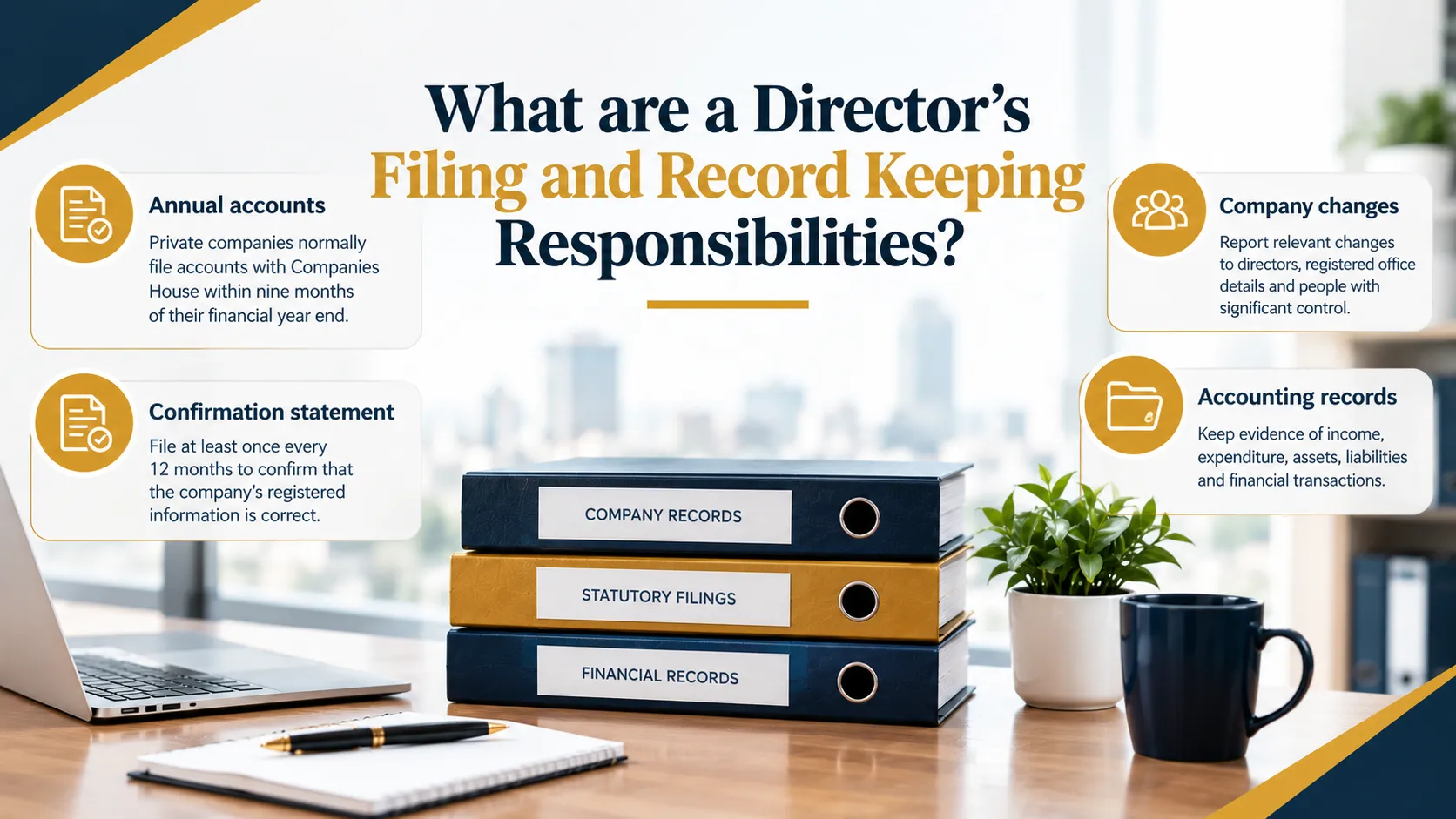
Directors must ensure the company keeps appropriate records and submits required documents by the relevant deadlines. Using an accountant does not remove this responsibility.
1Annual accounts
Private companies normally file accounts with Companies House within nine months of their financial year end.
2Confirmation statement
File at least once every 12 months to confirm that the company's registered information is correct.
3Company changes
Report relevant changes to directors, registered office details and people with significant control.
4Accounting records
Keep evidence of income, expenditure, assets, liabilities and financial transactions.
For Corporation Tax purposes, accounting records generally need to be retained for at least six years from the end of the relevant financial year, although exceptions apply.
Keep business and personal finances separate. A dedicated business bank account and organised records make it easier to prepare accounts, calculate tax and explain company transactions.
What are the Main Filing and Tax Deadlines?
Directors should keep a calendar of company filing dates and tax payments. For a typical private limited company, the usual deadlines are:
| Requirement | Usual deadline |
|---|---|
| First accounts | Usually within 21 months of incorporation if the first accounts cover more than 12 months. Specific rules apply. |
| Annual accounts | Nine months after the financial year ends. |
| Corporation Tax payment | Nine months and one day after the accounting period ends. |
| Company Tax Return | Twelve months after the accounting period ends. |
| Confirmation statement | At least once every 12 months, with up to 14 days after the review period ends to file. |
These are general deadlines. Your company's first accounting period and other circumstances can affect the dates. Check the official GOV.UK guide to company accounts and tax returns and your company's Companies House record.
What are a Director's Responsibilities When Taking Money Out?
A director must ensure that money taken from the company is recorded correctly as salary, dividends, a loan repayment or another appropriate transaction. These categories have different legal and tax implications.
Important: Do not treat company money as personal income without recording the transaction correctly. If you are unsure how a payment should be classified, seek accounting advice before processing it.
Need Help with Company Director Compliance?
Henleaze Tax Consultancy provides clear, fixed fee accounting and tax support to businesses in Bristol and across the UK. Let us handle the filings so you can focus on running your company.
What New Rules and Risks Should Directors Know About?
Directors must comply with applicable Companies House identity verification requirements and should be cautious about offers to become a director of an unfamiliar company.
1Identity verification
Identity verification is now a legal requirement for company directors. Directors should follow the applicable process and provide their Companies House personal code as required, including through the company's next confirmation statement where applicable.
Companies House identity verification guidanceScam warning
Companies House warns about scams offering money in return for being named as a director of an unknown company. Do not provide identity details or sign documents if you do not understand the arrangement. A director involved with a fraudulent company could face legal action, financial consequences or disqualification for up to 15 years.
What Happens if a Director Fails to Meet Their Responsibilities?
Directors who breach their duties or fail to meet legal requirements may face fines, prosecution, disqualification or personal liability in certain circumstances.
Key note: A limited company generally remains responsible for its own debts, but directors can face personal consequences in specific circumstances. If your company cannot pay its debts, seek professional advice promptly. Directors may need to prioritise creditors' interests and carefully assess whether continuing to trade is appropriate.
Can You Delegate Director Responsibilities to an Accountant or Company Secretary?
Yes. Directors can appoint professionals to handle administrative work, but they remain legally responsible for the company.
If you are unsure about the distinction, our guide to Company Secretary vs Company Secretarial Service explains the difference between appointing a secretary and outsourcing administrative tasks.
You can also read our guide to Do Small Companies Need a Company Secretary in the UK? to learn when an appointment is required.
For help comparing service packages, see our guide to company secretary cost.
Frequently Asked Questions
Final Words
The responsibilities of a company director in the UK include meeting legal duties, keeping reliable records, filing accounts and managing company money correctly. Delegating administrative work can save time, but directors must still understand their obligations and ensure the company remains compliant.
Henleaze Tax Consultancy provides clear, fixed fee accounting and tax support to businesses in Bristol and across the UK. If you need help with company records, statutory filings or related compliance work, explore our Company Secretarial services to see how we can support your business.
Locations We Cover Across the UK
Providing proactive accounting, tax planning, and payroll support to businesses, landlords, and contractors across the UK.